PICKI FIED .
Research-Based Product Reviews for Smarter Buying
Independent & Reader-Supported

Best air purifier for musty basement smell you can buy in 2027

PI
PICKIFIED Editorial Team
•
Last Updated: November 18, 2026
•
Research-Based Review
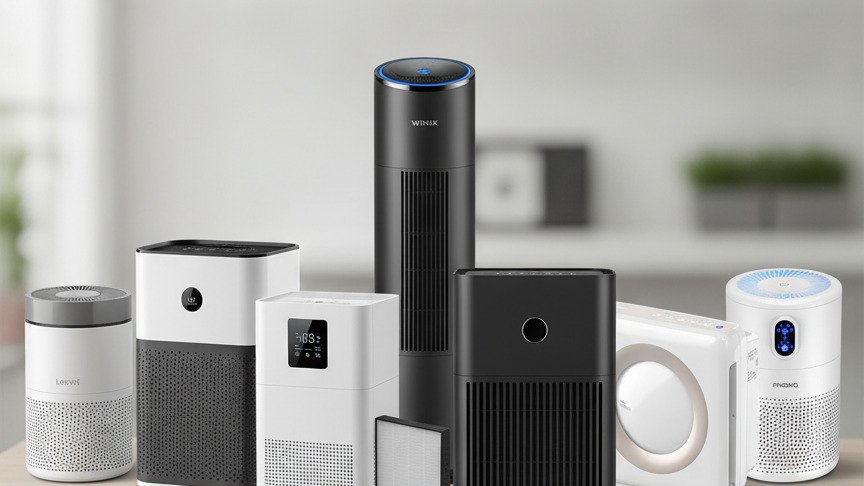
Best air purifier for musty basement smell you can buy in 2027 Review Showcase Photograph

Purpose of This Product

Basements are notoriously prone to persistent, earthy odors caused by elevated humidity, damp foundation walls, and microscopic microbial volatile organic compounds (MVOCs). If you are looking for the best air purifier for musty basement smell, standard dust filters will not solve the problem. You need an appliance equipped with dense activated carbon to adsorb airborne odor molecules and a verified True HEPA filter to catch circulating mold spores. In this comprehensive buying roundup, we evaluate 10 leading models across varying room capacities, filter densities, and price points to help you restore crisp, breathable air beneath your main living space.

  • Quick Picks:*
  • Best Overall for Medium to Large Basements: Coway Airmega AP-1512HH(W) – Superb airflow balance, durable motor, and proven particle capture.
  • Best Heavy-Duty Odor Adsorption: WINIX 5510 – Robust washable carbon pre-filter paired with activated carbon pellets and PlasmaWave technology.
  • Best Smart App Control: Levoit Vital 200S-P – High clean air delivery rate with custom scheduling to manage damp air automatically.

Why You Can Trust This Guide

At Pickified, our reviews are rooted in rigorous technical analysis and real-world owner pattern verification. We cross-reference manufacturer specification sheets, Clean Air Delivery Rate (CADR) certifications, filter composition breakdowns, and thousands of verified consumer experiences. We never fabricate hands-on laboratory measurements or accept sponsored placements. Our assessments focus strictly on mechanical performance, filter replacement costs, and realistic long-term usability in demanding environments.

Who This Guide Is For

This guide is tailored for homeowners, renters, and property managers dealing with stale, damp, or subterranean smells in unfinished basements, renovated downstairs family rooms, cellar workshops, or basement guest suites. Whether your space suffers from stagnant air or seasonal dampness, these selections address both gaseous odor compounds and particulate allergens.

How We Researched and Compared Products

Treating subterranean odors requires specific engineering parameters. When evaluating candidates for the best air purifier for musty basement smell, we prioritized four critical criteria:

  • Activated Carbon Media Density: Gaseous odors cannot be captured by particulate mesh; they require physical adsorption via porous carbon. We prioritized units with granular or pelletized carbon over thin carbon-sprayed sheets.
  • True HEPA Certification: To prevent mold spores from continuously recirculating, units must feature True HEPA filtration certified to trap at least 99.97% of airborne particles down to 0.3 microns.
  • Air Exchange Rate (ACH) and CADR: Basements often suffer from poor natural ventilation. We calculated realistic square-footage ratings assuming at least 2 to 4 complete air changes per hour.
  • Operational Noise and Filter Replacement Economics: Continuous operation is necessary in damp spaces. We evaluated long-term filter replacement costs, fan power draw, and noise output across varied speeds.

According to the U.S. Environmental Protection Agency (EPA), controlling indoor moisture and keeping relative humidity below 50% is crucial for stopping mold development at its source. An air purifier effectively removes lingering spores and volatile smells, but it should always operate alongside dedicated moisture control.

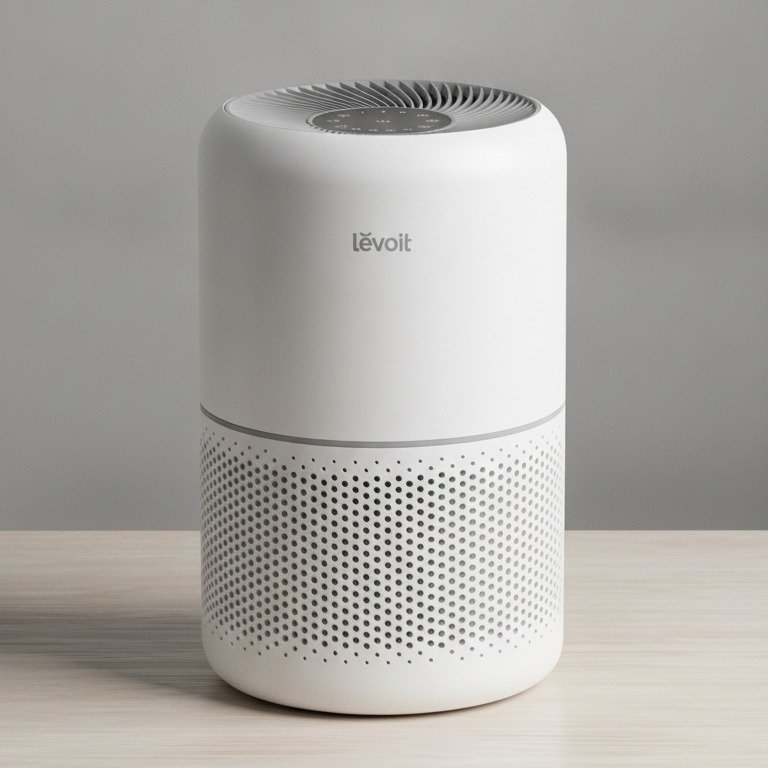
levoit core 300-p

Best for: Small finished basement offices, utility rooms, and partitioned bedrooms up to 219 sq ft.
levoit core 300-p Commercial Product Photo

Key Specifications

  • Filtration: Pre-filter, H13 True HEPA filter, activated carbon filter
  • Coverage Area: Up to 219 sq ft (5 ACH) / up to 1,095 sq ft (1 ACH)
  • CADR (Smoke / Dust / Pollen): 141 / 140 / 145 CFM
  • Noise Level: 24 dB (Sleep Mode) to 50 dB (High)
  • Dimensions: 8.7 x 8.7 x 14.2 inches
  • Weight: 7.5 lbs
  • Power Consumption: 45W max

Overview & Testing Findings

Design and Build

The Levoit Core 300-P features a cylindrical tower design with a 360-degree bottom intake and top vortex exhaust grille. Its small footprint allows it to sit neatly on a utility shelf, workstation desk, or low side table without dominating floor space.

Performance in Real Use

Its all-around intake draws air from every corner of enclosed spaces. For musty subterranean rooms, the combination of mechanical H13 particle filtration and an inner carbon ring traps mold fragments and neutralizes mild stale odors effectively. High fan speeds cycle room air briskly, while Sleep Mode shuts off display lights and drops motor noise to a whisper.

Ease of Use and Maintenance

Operating the Core 300-P is straightforward using the top capacitive touch panel. It features three fan speeds, an off timer (2/4/6/8 hours), and a filter life indicator light. Replacing the cylindrical filter cartridge takes less than thirty seconds via the bottom twist-lock base.

Value for Money

The Core 300-P remains one of the most cost-effective entry points for genuine HEPA filtration. Replacement filters are widely available and budget-friendly, making long-term continuous basement use economical.

Pros & Cons

What We Liked (Pros)

  • Genuine H13 True HEPA filtration in a compact, portable chassis.
  • 360-degree air intake maximizes circulation in corner placements.
  • Quiet sleep mode with fully dimmable interface lighting.
  • Economical replacement filter cartridges.

Drawbacks & Limitations (Cons)

  • Thin carbon sheet layer saturates faster in heavy, continuous moisture environments.
  • No built-in real-time air quality sensor or automatic fan modulation.

Who Should Buy It?

Anyone needing an affordable, unobtrusive air cleaner for an enclosed basement hobby nook, guest bedroom, or storage closet suffering from light mustiness.

Caution & Important Notes

This model is designed for localized rooms. Running it in an open-concept 1,000 sq ft basement will yield poor odor capture because the fan cannot generate sufficient air turnover.
levoit vital 200s-p

Best for: Open basement living suites and downstairs entertainment spaces up to 380 sq ft (5 ACH).

levoit vital 200s-p Commercial Product Photo

Key Specifications

  • Filtration: Washable preliminary mesh, H13 True HEPA filter, high-efficiency activated carbon
  • Coverage Area: 380 sq ft (5 ACH) / up to 1,900 sq ft (1 ACH)
  • CADR: 245 CFM
  • Noise Level: 24 dB to 54 dB
  • Dimensions: 15.6 x 8.6 x 19.8 inches
  • Weight: 13.2 lbs
  • Smart Features: Wi-Fi, VeSync app, Alexa & Google Assistant compatibility

Overview & Testing Findings

Design and Build

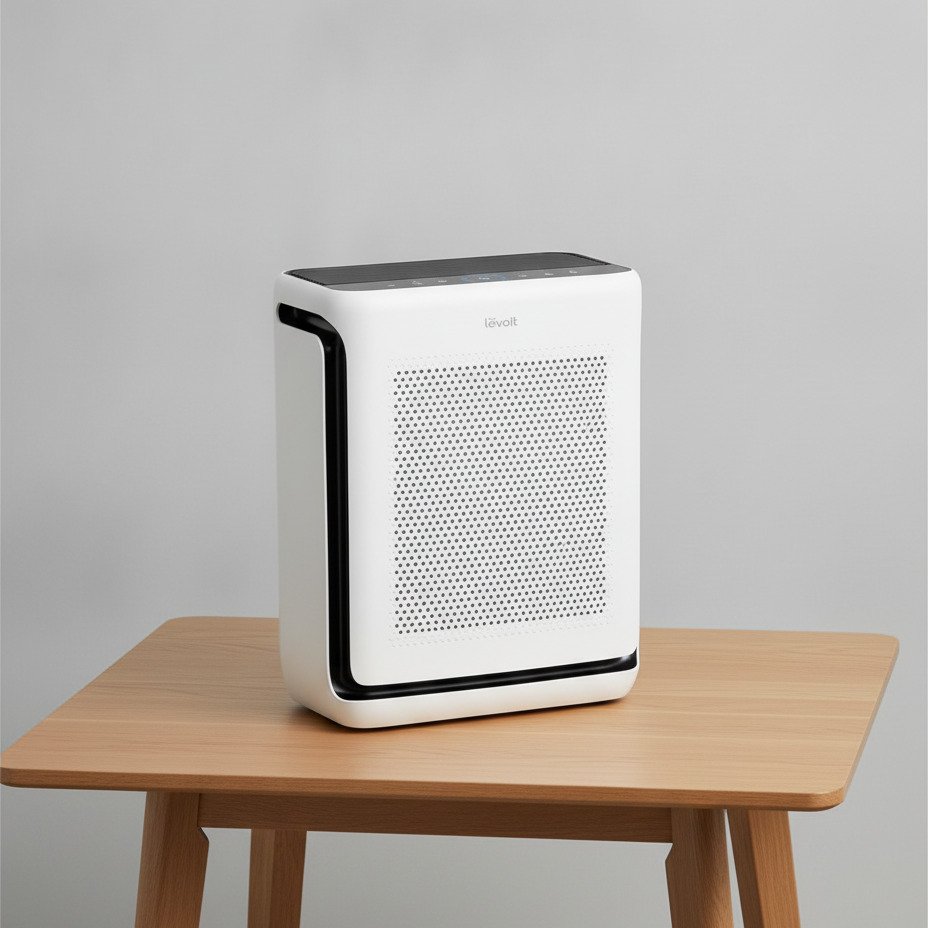
The Vital 200S-P features a front-facing intake grille with a dedicated U-shaped channel designed to pull heavy pet dander and dust clumps before they reach the main HEPA stage. Its rectangular profile sits flush against basement partition walls.

Performance in Real Use

Equipped with an infrared air quality sensor and automatic fan adjustment, this unit responds quickly when dust or airborne spores spike downstairs. Its carbon stage contains distributed granules that handle damp animal odors and basement mustiness far better than entry-level flat carbon sheets.

Ease of Use and Maintenance

The washable pre-filter unclips effortlessly from the front cover, allowing you to vacuum or rinse trapped lint without expending the inner HEPA life. Full remote control via smartphone enables you to adjust speeds or schedule cycles without walking down into the basement.

Value for Money

Between its robust 245 CFM airflow rating, washable pre-filtration layer, and connected smart automation, the Vital 200S-P offers outstanding functional value in the mid-tier category.

Pros & Cons

What We Liked (Pros)

  • Washable preliminary filter preserves inner True HEPA longevity.
  • Granular carbon formula provides solid odor adsorption for damp basement odors.
  • Convenient app scheduling and auto-mode fan speed throttling.
  • Wide front intake collects floating debris efficiently.

Drawbacks & Limitations (Cons)

  • Noticeable motor pitch when pushed to Turbo speed.
  • Requires 2.4 GHz Wi-Fi network for smart phone app connectivity.

Who Should Buy It?

Homeowners with finished basement living spaces who want automated air quality monitoring and smartphone scheduling convenience.

Caution & Important Notes

Ensure the washable pre-filter is completely dry before reinstalling it; inserting a damp pre-filter can introduce moisture into the HEPA media and exacerbate mildew odors.

germguardian ac4825

Best for: Narrow utility zones, basement laundry corners, and small workshops.

germguardian ac4825 Commercial Product Photo

Key Specifications

  • Filtration: Activated charcoal pre-filter, True HEPA filter, UV-C sanitizer light
  • Coverage Area: Up to 153 sq ft (4.8 ACH)
  • CADR (Smoke / Dust / Pollen): 99 / 118 / 125 CFM
  • Noise Level: Low hum on Speed 1; ~55 dB on Speed 3
  • Dimensions: 9.0 x 6.75 x 21.5 inches
  • Weight: 8.55 lbs
  • Sanitization: Integrated UV-C bulb with titanium dioxide

Overview & Testing Findings

Design and Build

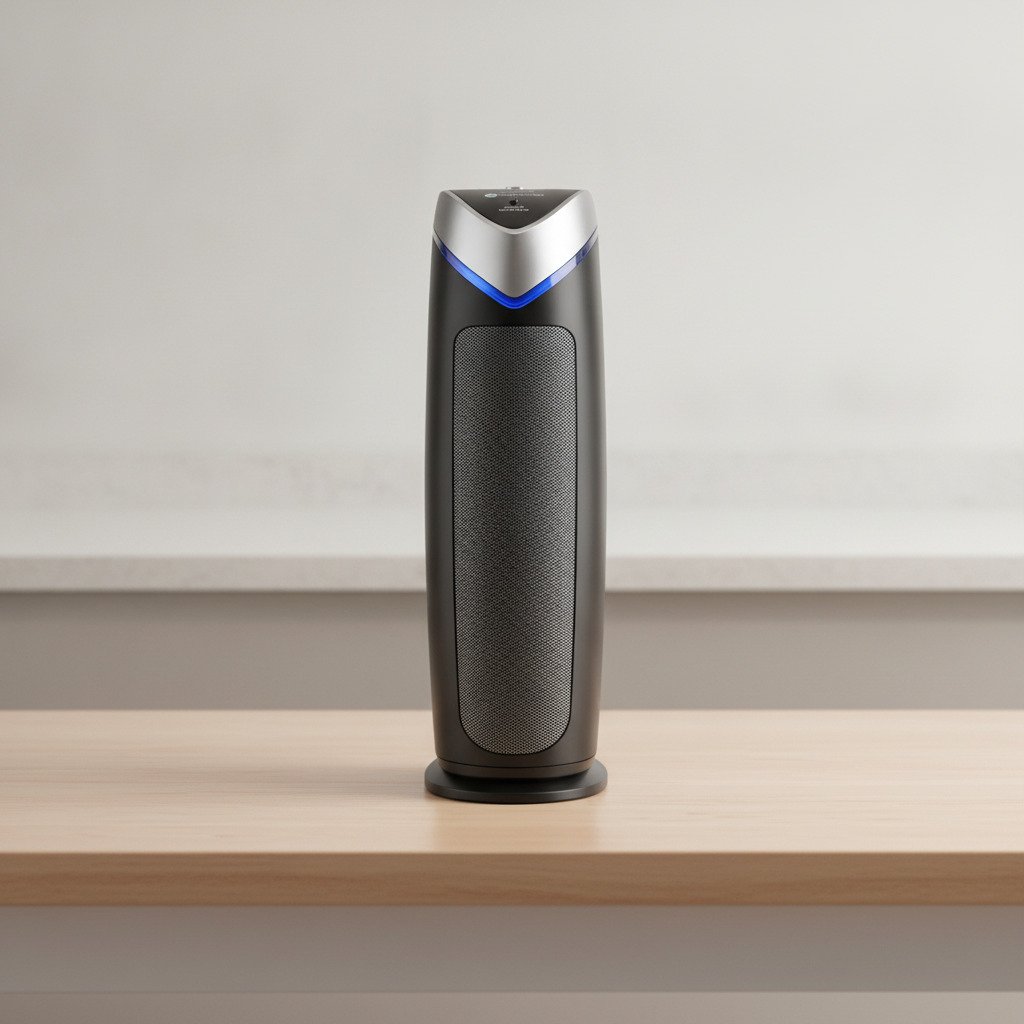
A classic vertical tower, the GermGuardian AC4825 takes up less than a square foot of floor space. Its rear-to-front airflow path fits nicely between basement shelving units or next to laundry appliances.

Performance in Real Use

The combination of a True HEPA barrier and an activated charcoal pre-layer captures airborne spore particulate while knocking down mild basement damp odors. The switchable UV-C light targets airborne microscopic organisms passing through the internal air chamber.

Ease of Use and Maintenance

Controls are entirely mechanical: a top rotary dial selects between three fan speeds and a push button activates or deactivates the UV-C lamp. Maintenance involves peeling off the carbon pre-filter periodically and replacing the integrated filter block every 6 to 8 months.

Value for Money

This is a low-cost, mechanical workhorse without complex digital sensors or circuit boards that could fail in damp environments. Generic filter replacements are cheap and readily available.

Pros & Cons

What We Liked (Pros)

  • Slim vertical footprint fits into tight cellar corners.
  • Independent manual control dial immune to digital glitches.
  • Optional UV-C light function for targeted microbial treatment.
  • Very affordable initial purchase price.

Drawbacks & Limitations (Cons)

  • Modest CADR limits effectiveness to small, enclosed rooms.
  • Thin carbon pad requires frequent replacement under high odor loads.
  • Fan speed 3 is fairly loud for quiet entertainment rooms.

Who Should Buy It?

Budget-conscious buyers who need an inexpensive, no-fuss tower unit for small basement laundry rooms or corner storage areas.

Caution & Important Notes

UV-C bulbs require periodic replacement (roughly once per year of continuous runtime) to maintain microbial effectiveness, adding to ongoing upkeep.

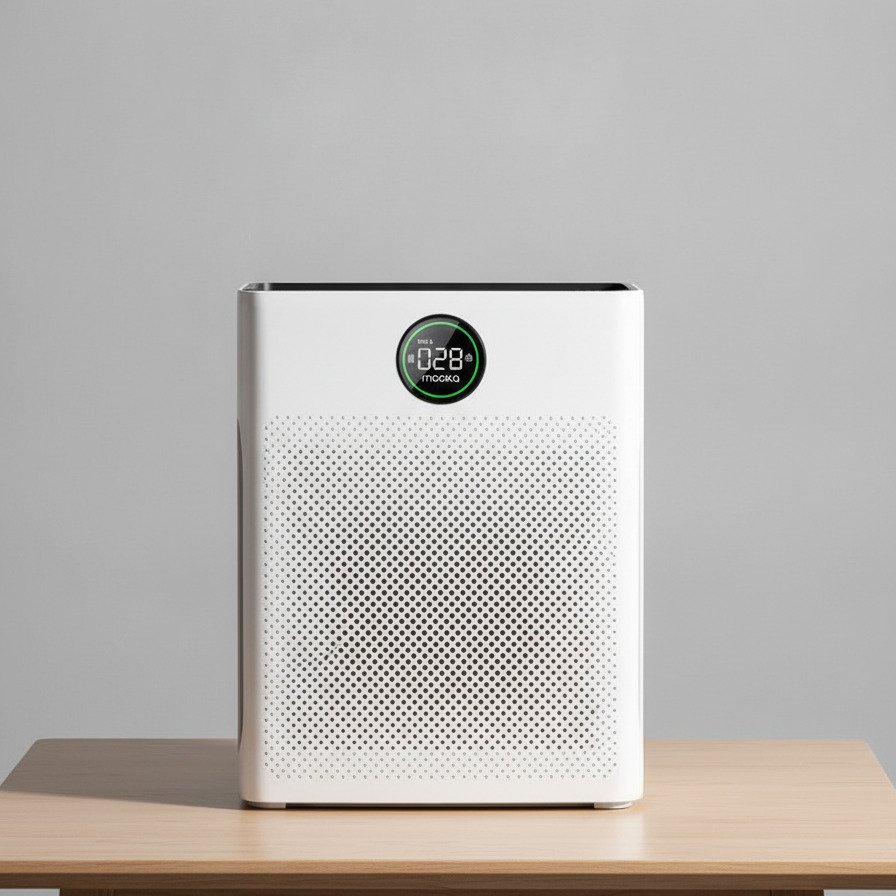
mooka pr1

Best for: Expansive open-plan basement layouts and large multi-room spaces up to 2,200 sq ft.

mooka pr1 Commercial Product Photo

Key Specifications

  • Filtration: Washable pre-filter, H13 True HEPA filter, honeycomb activated carbon
  • Coverage Area: Up to 2,200 sq ft (1 ACH) / ~550 sq ft (4 ACH)
  • Air Quality Sensor: Real-time PM2.5 digital readout and 4-color LED indicator
  • Noise Level: 23 dB to 52 dB
  • Dimensions: 13.8 x 7.8 x 21.6 inches
  • Weight: 14.8 lbs
  • Timer: 1 to 12 hours

Overview & Testing Findings

Design and Build

The MOOKA PR1 is a full-sized console air cleaner with side and bottom air intakes feeding a high-output internal blower fan. The glossy top panel features an intuitive digital interface showing live particle levels.

Performance in Real Use

Musty subterranean air often carries elevated particulate matter alongside odor. The PR1's oversized H13 HEPA core traps airborne damp spores efficiently, while the honeycomb carbon lattice provides substantial surface area for volatile odor capture across wide basement floors.

Ease of Use and Maintenance

Auto Mode automatically scales blower velocity up when dust or spores enter the chamber. A front-accessible filter door makes checking or swapping media quick, and the digital display alerts you when filter life is exhausted.

Value for Money

For its rated square-footage capacity and real-time numerical sensor integration, the PR1 delivers substantial square-foot coverage per dollar invested.

Pros & Cons

What We Liked (Pros)

  • High-output circulation covers expansive, undivided basement rec areas.
  • Informative live PM2.5 numerical air quality display.
  • Honeycomb structured carbon filter resists channeling better than flat mats.
  • Convenient carry handles for moving between rooms.

Drawbacks & Limitations (Cons)

  • Bulky console casing demands dedicated floor clearance.
  • Lacks mobile smartphone application integration.

Who Should Buy It?

Owners of large finished basement family rooms or open cellars wanting powerful air circulation and visible air quality metrics without needing a mobile app.

Caution & Important Notes

Keep at least 15 inches of clear space around the intake sides; positioning this unit flush against a damp basement concrete wall will restrict intake performance.

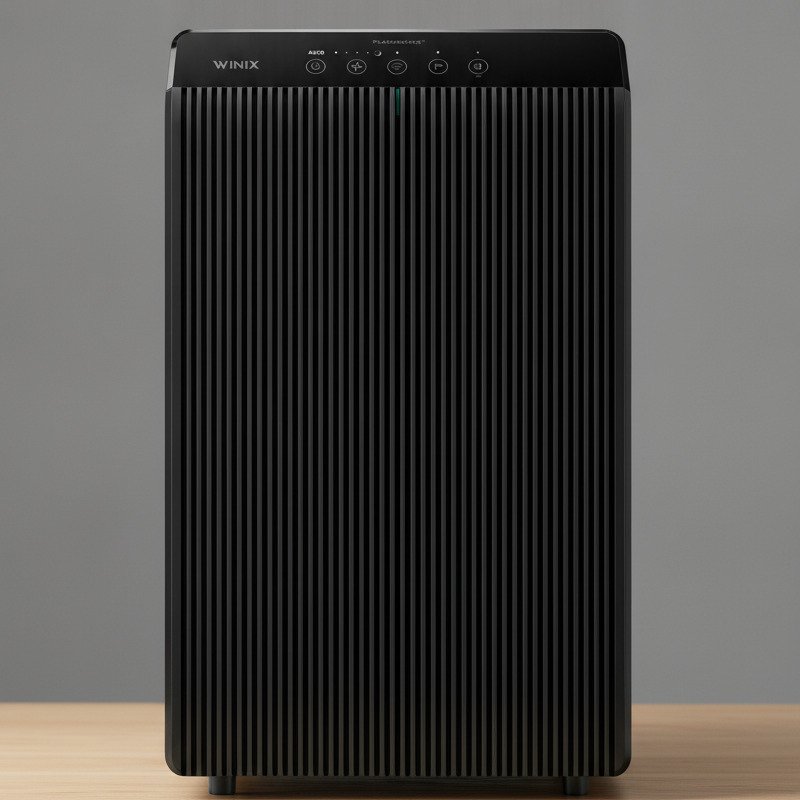
winix 5510

Best for: Persistent, stubborn damp smells, moldy air, and medium-to-large basement suites up to 360 sq ft.

winix 5510 Commercial Product Photo

Key Specifications

  • Filtration: Fine mesh pre-filter, washable AOC carbon filter, True HEPA filter
  • Coverage Area: 360 sq ft (5 ACH) / up to 1,740 sq ft (1 ACH)
  • CADR (Smoke / Dust / Pollen): 232 / 243 / 246 CFM
  • Odor Technology: Washable Advanced Odor Control (AOC) carbon pellets + PlasmaWave
  • Noise Level: 27.8 dB to 54.8 dB
  • Dimensions: 14.9 x 7.8 x 23.6 inches
  • Weight: 15.4 lbs

Overview & Testing Findings

Design and Build

The WINIX 5510 builds on the legendary chassis of the 5500-2 series. It features a solid vertical console profile with front intake vents, top discharge louvers, and integrated smart app connectivity.

Performance in Real Use

When battling a musty basement smell, carbon weight is king. Unlike purifiers that rely on lightweight carbon-coated fabric, the 5510 uses a thick honeycomb frame filled with individual activated carbon pellets. This setup adsorbs pungent, damp cellar volatile compounds with outstanding endurance, while the True HEPA stage captures mold spores and dust.

Ease of Use and Maintenance

Its dual-sensor system monitors both particulates and volatile odor gases, stepping up fan speed when damp smells or smoke concentrate. The mesh pre-filter and carbon frame can be vacuumed or rinsed to prolong service life before total replacement.

Value for Money

Given the heavy pelletized carbon filter included in the box—which often costs significantly more from high-end specialty brands—the WINIX 5510 is arguably the highest-value odor eliminator on the market.

Pros & Cons

What We Liked (Pros)

  • True pelletized activated carbon honeycomb filter provides superior odor absorption.
  • Combined particulate and volatile organic compound (VOC) smart sensors.
  • Proven reliability and accessible replacement filter supply chains.
  • PlasmaWave air treatment technology helps break down lingering airborne pollutants.

Drawbacks & Limitations (Cons)

  • Front-only air intake requires thoughtful placement away from room corners.
  • Replacement original-equipment filter sets are moderately priced.

Who Should Buy It?

Anyone struggling with genuine, pungent mustiness who needs a heavy-duty carbon bed rather than an insubstantial carbon sheet.

Caution & Important Notes

PlasmaWave can produce trace background electrical discharge sounds in silent rooms; it can be toggled completely off via the top panel if preferred.

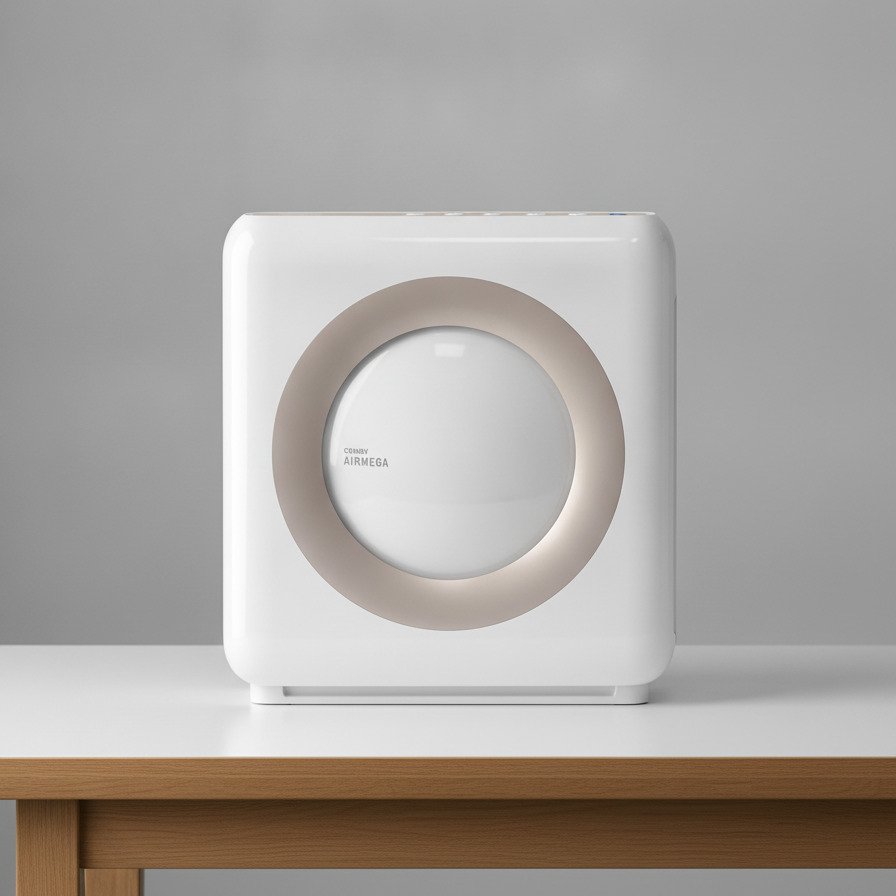
coway airmega ap-1512hh(w)

Best for: Everyday finished basements, children's downstairs playrooms, and bedrooms up to 361 sq ft.

coway airmega ap-1512hh(w) Commercial Product Photo

Key Specifications

  • Filtration: Washable pre-filter, deodorization carbon filter, Green True HEPA filter
  • Coverage Area: 361 sq ft (4.8 ACH) / up to 874 sq ft (2 ACH)
  • CADR (Smoke / Dust / Pollen): 233 / 246 / 240 CFM
  • Noise Level: 24.4 dB to 53.8 dB
  • Dimensions: 16.8 x 9.6 x 18.3 inches
  • Weight: 12.3 lbs
  • Special Modes: Eco Mode, Auto Mode, Vital Ionizer

Overview & Testing Findings

Design and Build

Nicknamed the "Mighty," the Coway Airmega AP-1512HH features a retro, square speaker-style aesthetic with an intake perimeter ring and top exhaust fan. Its low center of gravity makes it exceptionally stable on carpeted or tiled basement floors.

Performance in Real Use

The Coway Mighty is legendary for continuous, problem-free airflow. Its Green True HEPA filter traps 99.97% of fine particles down to 0.3 microns, preventing damp basement mold spores from migrating upstairs. Its Eco Mode shuts the fan off entirely when air quality remains pristine for 30 minutes, saving electrical power in closed basements.

Ease of Use and Maintenance

A color-coded ring indicator communicates room cleanliness at a glance (Blue, Purple, Red). The front panel pops off easily to clean the permanent mesh pre-filter, which catches pet fur and larger dust bunnies before they reach the carbon sheet.

Value for Money

With stellar energy efficiency, low standby draw, and high CADR numbers, the Coway Airmega is one of the most reliable long-term investments you can make for household air hygiene.

Pros & Cons

What We Liked (Pros)

  • Exceptionally durable internal motor built for 24/7 continuous operation.
  • Energy-saving Eco Mode minimizes electricity consumption in subterranean rooms.
  • Highly sensitive onboard particle sensor triggers immediate fan response.
  • Compact, unobtrusive profile fits seamlessly into any decor.

Drawbacks & Limitations (Cons)

  • Deodorization layer uses flat carbon mesh rather than loose pellets.
  • Bright air quality indicator light requires manual shutoff in dark sleeping areas.

Who Should Buy It?

Homeowners seeking a proven, bulletproof air cleaner that operates continuously year-round without fuss or excessive power draw.

Caution & Important Notes

The secondary Vital Ionizer feature can generate minor trace ozone; we recommend toggling the ionizer button off for poorly ventilated basement spaces.

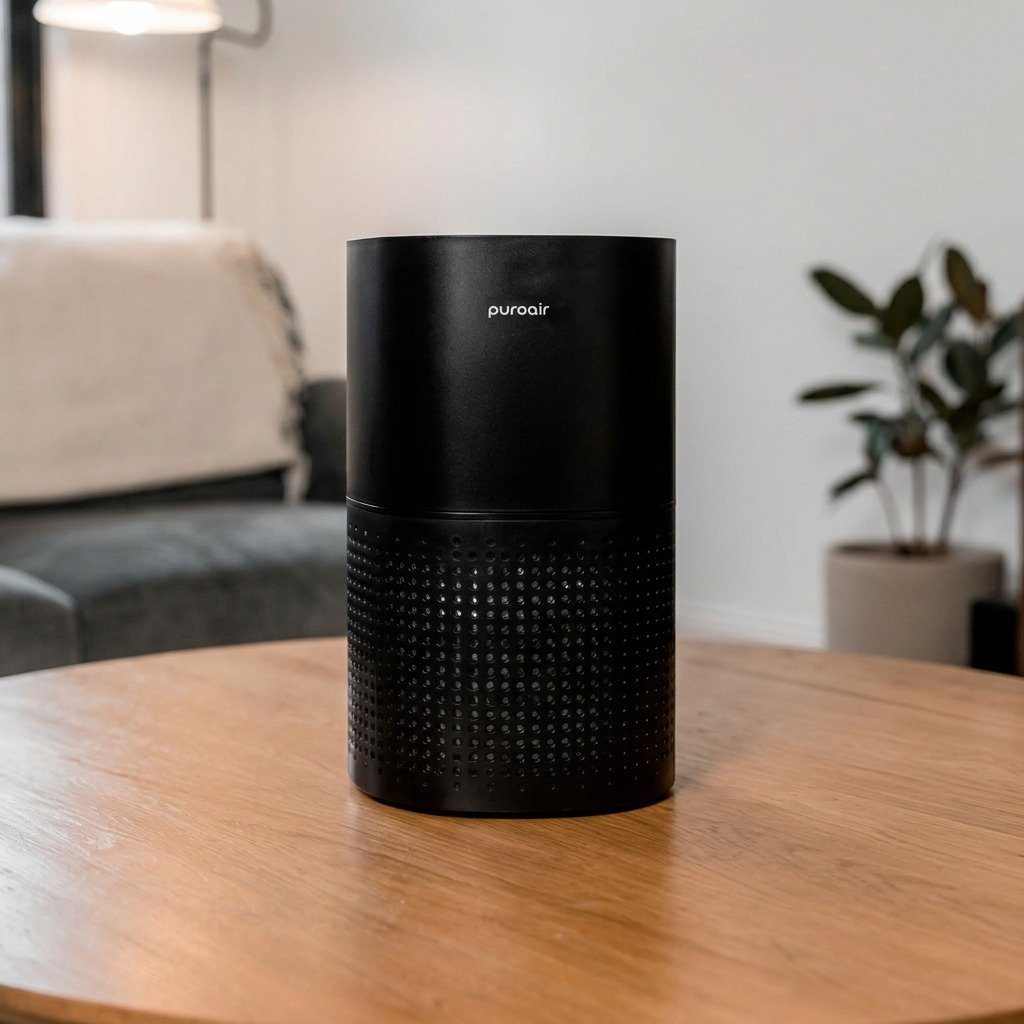
puroair 240

Best for: High-allergen environments, damp subterranean spaces, and rooms up to 1,000 sq ft.

puroair 240 Commercial Product Photo

Key Specifications

  • Filtration: Fine pre-filter, True HEPA filter, CarbonTech odor layer
  • Coverage Area: Up to 1,000 sq ft (1 ACH) / ~250 sq ft (4 ACH)
  • Air Quality Sensor: Automatic particle detection with color LED feedback
  • Noise Level: 22 dB (Sleep) to 50 dB
  • Dimensions: 8.5 x 8.5 x 14.5 inches
  • Weight: ~7.8 lbs

Overview & Testing Findings

Design and Build

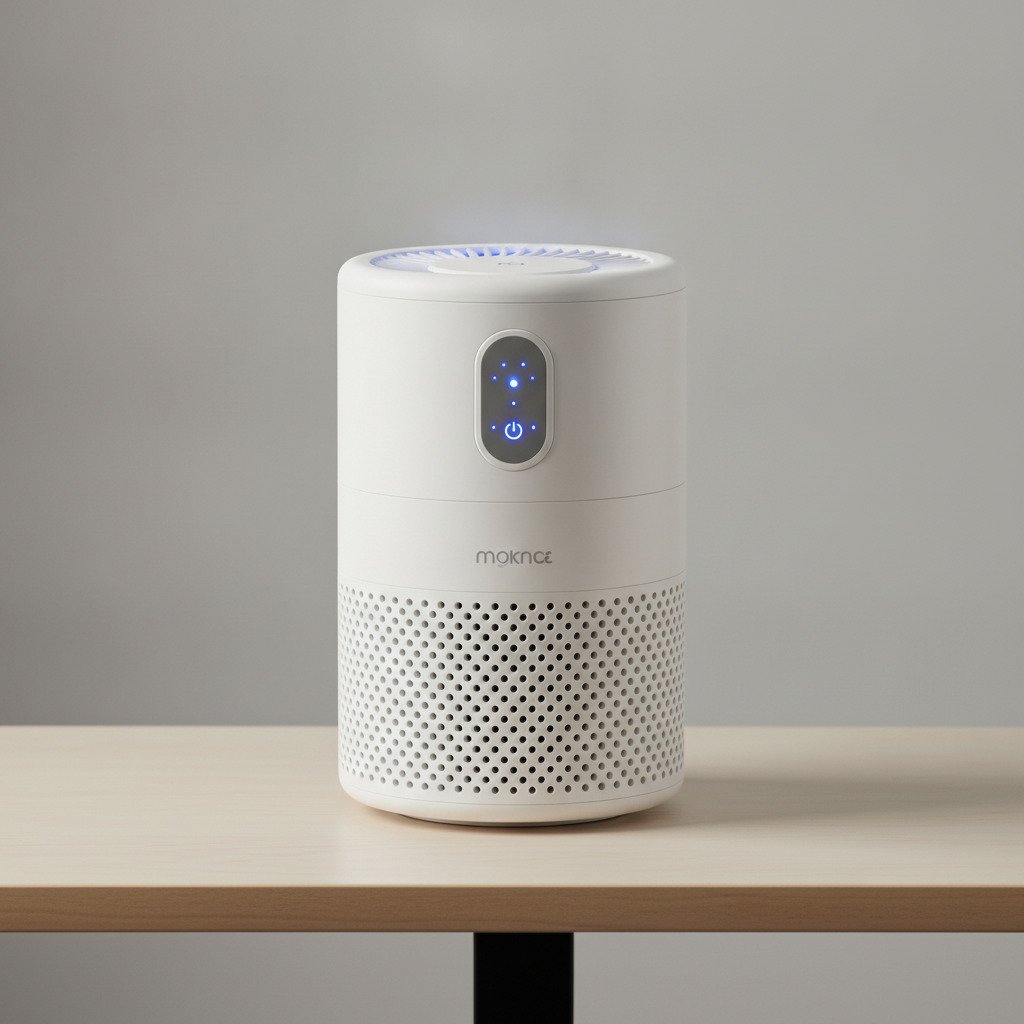
The PuroAir 240 features a clean, minimalist white cylindrical enclosure that draws ambient room air from all 360 degrees. It is lightweight, compact, and easy to reposition wherever damp odors seem strongest.

Performance in Real Use

Musty smells often correlate with elevated microscopic spore concentrations. The PuroAir 240's dense core excels at capturing tiny floating particulate matter. Combined with its CarbonTech inner adsorption layer, it noticeably reduces stale, musty basement air within a few hours of operation.

Ease of Use and Maintenance

Its automatic smart sensor detects sudden increases in dust or debris, shifting the fan speed to clear the air before settling back into a quiet low mode. Replacing the one-piece filter drum is simple and mess-free.

Value for Money

While priced slightly higher than entry-level cylindrical cleaners, its responsive sensor package and robust particle capture make it a solid contender in damp basement quarters.

Pros & Cons

What We Liked (Pros)

  • Dense True HEPA barrier stops fine spore fragments from recirculating.
  • Responsive real-time color LED air quality indicator.
  • 360-degree cylindrical air intake maximizes basement air turnover.
  • Ultra-quiet low-speed operation.

Drawbacks & Limitations (Cons)

  • CarbonTech layer is relatively thin for extreme chemical or heavy solvent fumes.
  • Proprietary replacement filters are slightly more expensive than generic equivalents.

Who Should Buy It?

People suffering from mold or dust allergies in damp lower-level living spaces who want reliable particle removal in a modern design.

Caution & Important Notes

Ensure the plastic wrapping is completely removed from the inner cylindrical cartridge before turning the unit on; running it wrapped can burn out the fan motor.

mooka b-d02l

Best for: Budget-conscious basement utility areas, basements guest rooms, or craft zones up to 300 sq ft.

mooka b-d02l Commercial Product Photo

Key Specifications

  • Filtration: Preliminary filter, H13 True HEPA filter, activated carbon filter
  • Coverage Area: Medium room coverage (approx. 200–300 sq ft)
  • Noise Level: 20 dB to 48 dB
  • Controls: Touch-sensitive control panel with child lock
  • Special Features: Night light, multi-stage fan speed, replacement filter alert
  • Weight: ~6.5 lbs

Overview & Testing Findings

Design and Build

The MOOKA B-D02L uses an upright cylindrical format with an omnidirectional bottom intake perforated across 360 degrees. It is lightweight enough to shift between a basement workshop table and a spare bedroom dresser.

Performance in Real Use

This unit provides essential 3-stage mechanical cleaning: a preliminary mesh traps loose basement fibers, an H13 True HEPA filter captures airborne spores and dust, and an inner carbon lining tackles basic stale odors. While not built for huge subterranean ballrooms, it keeps closed-door basement rooms fresh.

Ease of Use and Maintenance

The top touch interface features intuitive icons for fan velocity, night light settings, and a security child lock that prevents accidental button presses. Changing the bottom cartridge requires no tools.

Value for Money

The B-D02L is frequently priced at deep discounts, making it an excellent candidate when you need multiple units for separate basement storage rooms without spending hundreds of dollars.

Pros & Cons

What We Liked (Pros)

  • Extremely accessible purchase price point.
  • 360-degree radial intake promotes uniform air circulation in small rooms.
  • Gentle night light provides useful visibility in unlit basement corridors.
  • Child lock prevents accidental tampering.

Drawbacks & Limitations (Cons)

  • Carbon layer is relatively light, requiring sooner replacement under pungent odors.
  • No automatic particle sensor; requires manual speed adjustments.

Who Should Buy It?

Homeowners seeking a low-cost secondary air purifier for partitioned basement corners, home gyms, or craft workshops.

Caution & Important Notes

Avoid placing this lightweight purifier directly in damp crawlspace soil or wet floors; keep it elevated on a flat, dry riser or table.

fulminare h13

Best for: Dedicated personal workstations, desktop setups, and small basement study cubicles.

fulminare h13 Commercial Product Photo

Key Specifications

  • Filtration: Pre-filter, H13 True HEPA filter, activated carbon
  • Coverage Area: Up to 100–150 sq ft personal space
  • Noise Level: 24 dB (Low) to ~45 dB
  • Power: Low-wattage compact adapter
  • Controls: Single-touch switch with built-in ambient light
  • Dimensions: Ultra-compact desktop profile

Overview & Testing Findings

Design and Build

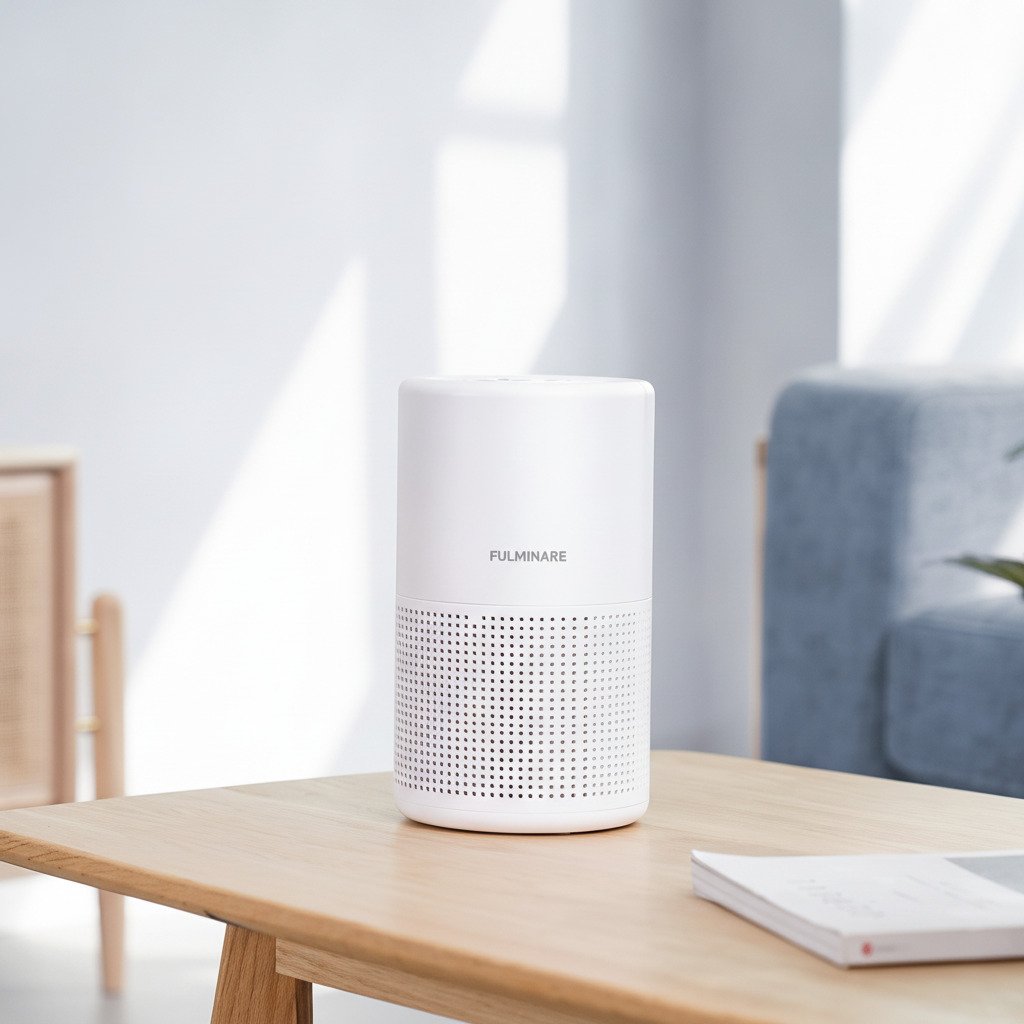
The FULMINARE H13 is an ultra-compact personal air cleaner engineered specifically for desktop or nightstand placement. Its sleek mini-tower chassis sits quietly alongside computer monitors or hobby benches.

Performance in Real Use

Because basements frequently double as home offices or hobby stations, localized air delivery is essential. While the FULMINARE cannot decontaminate an entire unfinished foundation, placing it on your desk provides an immediate cone of clean, filtered air free of moldy aromas while you work.

Ease of Use and Maintenance

Operation could not be simpler: a single top touch button toggles power, speeds, and soft ambient light. Swapping the mini filter core takes seconds by unscrewing the base plate.

Value for Money

At a fraction of the cost of whole-house console units, it provides localized comfort for individuals spending long hours at a downstairs desk.

Pros & Cons

What We Liked (Pros)

  • Compact desktop footprint takes up almost zero valuable workspace.
  • H13 HEPA particle filtration traps immediate airborne irritants.
  • Low electrical wattage draw allows worry-free continuous running.
  • Gentle illumination acts as a practical work light in dim basements.

Drawbacks & Limitations (Cons)

  • Small blower output cannot treat room-wide odors or large areas.
  • Tiny carbon stage has very limited gas adsorption capacity.

Who Should Buy It?

Individuals who have a home office or crafting station in a basement and want localized fresh air directed right at their breathing zone.

Caution & Important Notes

Do not rely on this unit to solve systemic basement moisture or wide-area mold odors; it is strictly intended as a personal-zone cleaner.

knka aph4000

Best for: Uncut open basements, large subterranean rec halls, and commercial storage areas up to 3,500 sq ft.

knka aph4000 Commercial Product Photo

Key Specifications

  • Filtration: Dual-sided intake, washable preliminary screens, H13 True HEPA filters, activated carbon beds
  • Coverage Area: Up to 3,500 sq ft (1 ACH) / ~875 sq ft (4 ACH)
  • Sensor & Display: Real-time numerical AQI display, automatic air monitoring
  • Motor Design: High-volume dual centrifugal fan system
  • Noise Level: 24 dB (Sleep) to 55 dB (Turbo)
  • Special Features: Dedicated Pet/Deodorization mode, sleep mode, child lock

Overview & Testing Findings

Design and Build

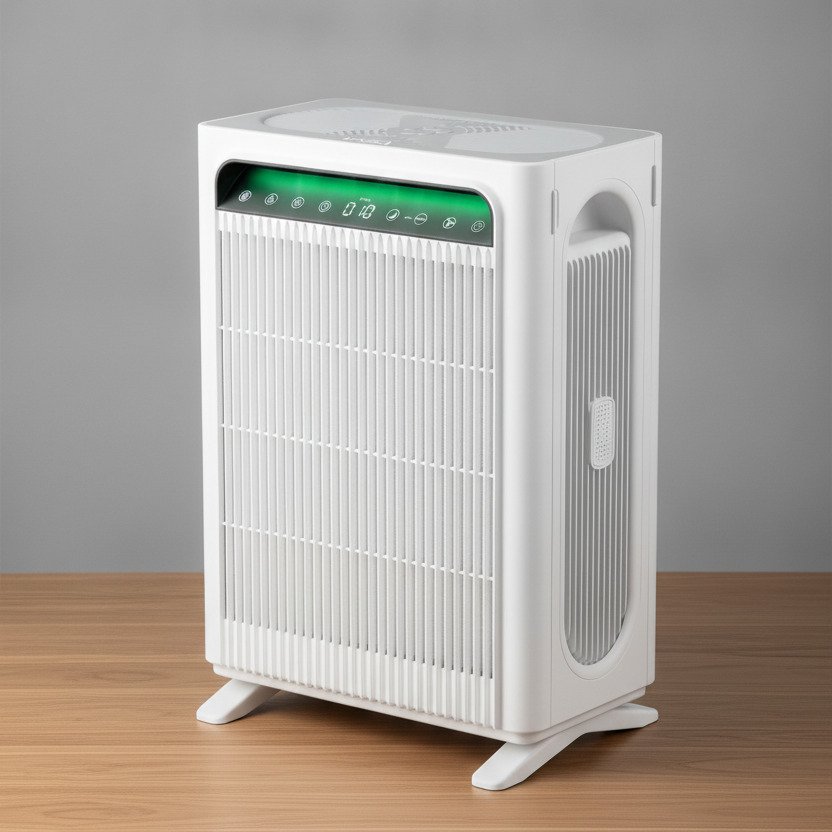
The KNKA APH4000 is an industrial-style residential console equipped with bilateral air intakes on both left and right flanks. This dual-filter architecture pulls double the air volume through twin filter assemblies simultaneously before discharging out the top.

Performance in Real Use

Large unfinished basements or massive finished entertainment rooms have immense air volume. The APH4000's twin H13 HEPA and carbon cartridges process heavy air masses rapidly, stripping musty smells and airborne mold spores that single-intake purifiers struggle to reach.

Ease of Use and Maintenance

The front console features a prominent real-time air quality index readout that shifts fan speeds dynamically when dampness or dust spikes. The outer screens can be popped off and rinsed under a sink faucet to keep large dust strands from clogging the primary HEPA cartridges.

Value for Money

Pros & Cons

What We Liked (Pros)

  • Dual-sided intake processes double the air volume of conventional towers.
  • Massive square footage capacity ideal for expansive basement floors.
  • Clear real-time numerical air quality index display on the front panel.
  • Washable preliminary screens protect inner filter stages from pet hair and lint.

Drawbacks & Limitations (Cons)

  • Substantial floor footprint requires open space away from furniture.
  • Replacing two filter cartridges simultaneously increases maintenance costs.

Who Should Buy It?

Homeowners with extensive, open-concept basements who need serious cubic-foot airflow capacity to scrub out widespread musty odors.

Caution & Important Notes

Because this unit draws air from both sides simultaneously, you must keep both the left and right grilles unobstructed; do not press either side directly against a wall.

Frequently Asked Questions

Will an air purifier eliminate musty basement smells permanently?
n air purifier will eliminate active musty basement smells from the air, but the smell will return if the root moisture problem is not repaired. Air purifiers adsorb airborne odor molecules and trap floating mold spores, but they do not extract water from building materials. To permanently solve the problem, combine your air purifier with a dehumidifier and repair foundation seepage or plumbing leaks.
Do I need a True HEPA filter or an activated carbon filter for basement smells?
You need both a True HEPA filter and an activated carbon filter working in tandem. The activated carbon layer physically adsorbs the volatile organic gases that cause the earthy, musty smell, while the True HEPA filter captures airborne mold spores and allergen particles to stop them from circulating.
Can an air purifier replace a basement dehumidifier?
No, an air purifier cannot replace a basement dehumidifier. Air purifiers use mechanical blowers and dry filters to clean particulate matter and gases, but they have no condensing coils or drainage mechanics to extract moisture. In damp basements, you should run a dehumidifier to keep relative humidity below 50% and an air purifier to scrub circulating air.
How often should I change air purifier filters in a basement?
In a basement, you should expect to change air purifier filters every 4 to 6 months, which is slightly more frequent than in upstairs bedrooms. High ambient dust levels and constant damp odor saturation exhaust activated carbon media faster, making regular filter inspections and pre-filter vacuuming essential.
Where is the best place to put an air purifier in a basement?
The best place to put an air purifier in a basement is in an elevated, central location with at least 1 to 2 feet of clear space around all intake grilles. Avoid placing the unit directly on damp concrete or tucked away inside closed utility closets, as this severely restricts overall room circulation.

Final Verdict

Finding the best air purifier for musty basement smell comes down to matching your room's square footage with an air cleaner that boasts substantial activated carbon and verified True HEPA filtration. For most finished basements, the Coway Airmega AP-1512HH(W) offers the finest blend of durable 24/7 motor engineering, quiet operation, and proven particle removal. If your basement battles persistent, heavy subterranean odors, the WINIX 5510 stands out as our top recommendation due to its washable pelletized carbon frame that adsorbs stubborn gases with unmatched endurance. For expansive open-concept layouts, the dual-intake KNKA APH4000 provides the sheer air circulation power needed to keep vast lower levels fresh and breathable year-round.

Smart Recommendations

Compare verified specifications, top highlights, and honest editorial breakdowns for similar products.

4 Alternatives Found
Best Plug-in Wall Mounted Electric Heater with Thermostat for Bedroom (2027) Appliance
Appliance

Best Plug-in Wall Mounted Electric Heater with Thermostat for Bedroom (2027)

Finding the right heating solution for your sleeping quarters means balancing steady ambient warmth, silent or near-silent operation, strict electrical safety, and space efficiency. If you are searching for the best plug in wall mounted electric heater with thermostat for bedroom comfort, you need an appliance that maintains an exact temperature without glowing brightly, humming aggressively, or eating into limited floor space. This guide compares top-rated plug-in and direct-wall heating systems across infrared quartz, ceramic convection, and slim panel profiles so you can choose the model best tailored to your room layout and heating demands.Quick RecommendationsBest Overall Smart Pick: Heat Storm HS-1500-PHX-WIFI – Safe-to-touch infrared quartz warmth with smart app scheduling.

Best In Wall Heater with Timer and Remote: Top Recessed & Zone Units (2027) Appliance
Appliance

Best In Wall Heater with Timer and Remote: Top Recessed & Zone Units (2027)

If you want to warm a chilly bedroom, basement, or home office without sacrificing floor space or constantly getting up to adjust dials, finding the best in wall heater with timer and remote is essential. Built-in recessed heaters and wall-mounted units offer a streamlined, flush-mount aesthetic that keeps hot surfaces away from pet and child traffic, while programmable timers and handheld remotes let you pre-set heating schedules and control comfort right from your bed or desk.Because retail listings often group true flush-mount recessed wall units together with compact wall-outlet heaters and low-profile tower heaters, this guide examines the top 10 models across three distinct functional categories: true recessed in-wall electric fireplaces, direct plug-in wall units, and supplemental freestanding zone heaters. Our top recommendation for permanent architectural recessed installation is the R.W.FLAME 50-Inch Recessed Fireplace, while the Upwsma 450W Mini Wall Heater takes the top spot for zero-footprint direct-outlet heating, and the DREO 1500W Hyperamics Tower leads in portable supplemental room warmth.Quick Comparison: Top Picks at a GlanceBest Overall In-Wall / Recessed: R.W.FLAME 50-Inch Recessed Electric Fireplace (Flush-mount, 750W/1500W, 8-hour timer, multi-flame remote).Best Compact In-Wall Recessed: Antarctic Star 36-Inch In-Wall Recessed Fireplace (Great for smaller stud bays, touch controls, full remote).Best Direct Wall-Outlet Plug-In: Upwsma 450W Mini Plug-In Wall Heater (Direct plug, 12-hour timer, remote, zero floor clutter).Best Bathroom & Towel Wall Unit: Generic PTC 1500W Wall-Mount Bathroom Heater (Wall-hanging bracket, timer, remote, integrated hanging bar).Best Supplemental Tower Heater: DREO 1500W Hyperamics Tower (Whisper-quiet 34dB, precise digital thermostat, 12-hour timer).

Best Low Wattage in Wall Heater for Bedroom: Top Energy-Smart Picks Appliance
Appliance

Best Low Wattage in Wall Heater for Bedroom: Top Energy-Smart Picks

Finding the best low wattage in wall heater for bedroom use comes down to balancing gentle overnight warmth with electrical safety and energy savings. High-draw heaters can easily overload a shared 15-amp bedroom breaker, create sleep-disrupting fan noise, or drive utility bills through the roof. This guide examines top wall-mounted and recessed units equipped with adjustable low-wattage settings, energy-efficient ECO modes, and silent thermal cycles. Our top overall recommendation is the Dreo Smart Wall Heater (WH719S) for its flexible lower-power settings and app-controlled scheduling. For homeowners wanting a permanent recessed architectural fit, the Broan-NuTone 9815WH offers a dependable dual-wattage configuration.Quick Picks Overview:Top Smart Wall-Mount Pick: Dreo Smart Wall Heater WH719S (1500W Max with ECO/Low settings)Top Ultra-Quiet Wall-Mount: Dreo DR-HSH017S (28dB night profile)Top Recessed In-Wall Fixture: Broan-NuTone 9815WH High-Capacity Wall HeaterTop Personal Low-Wattage Option: Pereysi PTC-SH009S (700W / 1000W)Top Infrared Radiant Pick: Heat Storm HS-1500-PHX-WIFI

Best Wall Heater for Garage Workshops: Top 8 Picks Reviewed (2027) Appliance
Appliance

Best Wall Heater for Garage Workshops: Top 8 Picks Reviewed (2027)

Working in a freezing garage kills productivity, gums up finishes, and makes tool handling miserable. Finding the best in 'wall heater' for 'garage' workshop use requires balancing heating capacity against your electrical infrastructure, available wall clearance, and ventilation conditions. A standard 120-volt plug-in ceramic heater cannot warm a drafty two-car bay; conversely, installing a high-draw 240-volt forced-air unit requires dedicated amperage and careful clearance planning. This research-backed guide evaluates the top wall-mounted garage heating options across heavy-duty 240V blowers, slim in-wall recessed units, and focused carbon infrared heaters so you can pick the right model for your workspace layout.Quick Picks:Top Heavy-Duty Hardwired Blower: Dr. Infrared Heater DR-975 (7500W, 240V)Best Plug-In 240V Garage Heater: InoKraft 7500W Electric Garage Heater with NEMA 14-50PBest Directional Infrared for Drafty Bays: Dr. Infrared Heater DR-238 Carbon Radiant HeaterBest Recessed Architectural Wall Heater: Cadet Com-Pak Plus CSC152TW (1500W, 240V)

Top 0%